
These days, contemporary audiences seem far more influenced by shows like The Voice than by the concert hall. This may be partly because children have less exposure to fine art — and so we seek it less and less. While I would never suggest that auditioning for a talent competition implies a lack of artistic integrity, many of us have come to confuse winning the contest with the end game, rather than seeing it as a means to an artistic end. We are learning, through these influences, to be less impressed by substance and more drawn to sensationalism. Fame and fortune begin to seem like the destination rather than a byproduct of something more meaningful. So what should the end game actually be?
Art That Uplifts Without Playing to the Crowd
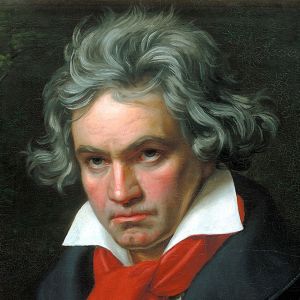
Ludwig van Beethoven — whose music has the power to uplift society without playing to the audience.
Art can accomplish at least two things simultaneously: it can appeal to audiences, and it can have substance — a genuine, positive contribution to the world. And an artist doesn’t have to lose their authentic voice in the process. One of the defining differences between a composer like Beethoven and composers of lesser gravitas is that his music has the power to uplift society, and it does so without pandering. That is a standard worth aspiring to.
Value-Creating Education: Makiguchi’s Vision

Tsunesaburo Makiguchi — pioneer of value-creating education and the idea of a contributive life.
The concept of value-creating education, pioneered by the influential Japanese educator Tsunesaburo Makiguchi, suggested that a contributive life — based on the cultivation of beauty, good, and gain — makes it possible for a person to do good in the world while fulfilling their ambitions and their mission in life. This framework has profound implications for artists navigating a career in the modern age.
The misunderstanding many artists have is that building a career requires bending one’s artistic principles to appeal to the masses. But it may have more to do with cultivating a broader spectrum of talents alongside mastering the instrument. As an entrepreneur who has gone through many evolutions, I believe it is a combination of utilizing one’s unique skills, unearthing the skills we never thought we’d need, and developing those that are lesser developed. The result: the artist becomes capable of solving their own career challenges — starting from exactly where they are, and daring to take one more authentic step at a time.
Laurie Anderson and the Multidimensional Artist

Laurie Anderson’s groundbreaking film Home of the Brave — a model of multidimensional artistic expression that reaches far beyond the classical concert hall.
Laurie Anderson has been one of the most influential artists in my life. While part of me felt a strange discomfort seeing a “violinist” also entertaining audiences on multiple dimensions — as in her groundbreaking film Home of the Brave — it was a compelling artistic experience that reached a far broader audience than most successful classical violin players ever do. And it did so without sacrificing artistic integrity.
Building an Audience Without Doing So at Any Cost
There is no question that most string players coming up today are already breaking boundaries that were previously unimaginable. But there remains the matter of attracting audiences without compromising what makes the art meaningful in the first place.
This is where value creation comes into play. What turns art into something more than an exploration of form? It is that poetic something that captures our hearts. The hallmark of much 20th century music was expanding the limits of musical form — yet how often did those composers effectively capture our hearts as well as our intellect? And when our emotions were engaged, were we also elevated?
The question for many contemporary string players is: how do you build a career in a climate where fewer jobs are ready-made by winning an orchestral audition, and more must be cultivated by the player — whether playing jazz, new age, pop, rock, or something entirely new? Being successful in this environment requires a combination of authenticity and a genuine willingness to serve the audience in the noblest sense of the word.
This is a kind of value different from the usual descriptors of a successful career — fame, fortune, power. It is a recognition that artists paint the world with their influence. The thoughtful artist understands the significance of that, and builds a career accordingly.
by Rozanna Weinberger
1 comment
Muchas gracias. ?Como puedo iniciar sesion?