
One of the first challenges for beginner viola players is learning to play on different strings cleanly — without accidentally hitting adjacent strings at the same time. While this requires some coordination, the bow arm should feel comfortable and relatively free of physical stress. The key is understanding how elbow height and arm weight work together.
Elbow Height and String Level
As you practice on different strings, the right elbow should adjust to each string level. This adjustment makes it possible for the weight of the arm to transfer naturally to each string. The optimal elbow height is roughly parallel to the hand and slightly lower than the bow when the arm weight is in the string. There should also be a relaxed, “weighty” feeling in the arm — not a forced pressing down, but a natural dropping of weight.
Arm Weight Awareness Study
- Allow the right arm to hang naturally at the side of the body.
- Form an ‘L’ shape by bending the elbow and raising the hand.
- Elevate the arm by lifting the elbow away from the body.
- Notice the muscular effort required to accomplish this simple task.
- Allow the elbow to drop, feeling the weight of the arm as it falls.
Which action requires more work — elevating the arm, or dropping it down? The answer reveals something important: gravity is already doing much of the work for you. Learning to use that natural arm weight — rather than pressing with the fingers or forcing the bow into the string — is the foundation of a healthy, resonant bow stroke.
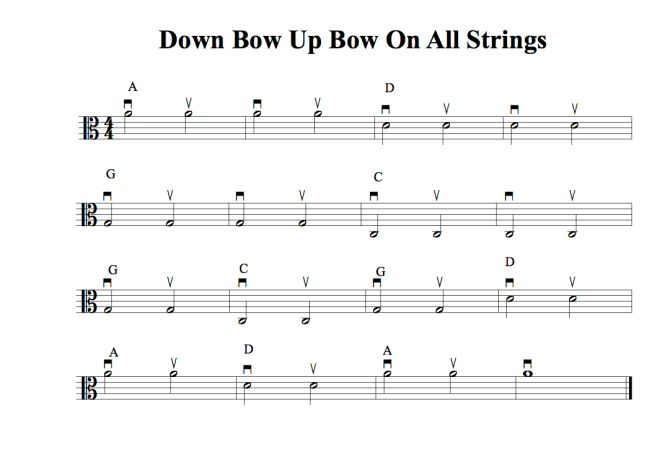
by Rozanna Weinberger
0 comments