

Throughout my studies, it was typical for teachers to espouse strong preferences between arm vibrato and wrist vibrato. D.C. Dounis takes an even more definitive position — going so far as to say one is categorically superior to the other. Continuing from the material covered in the interview between Samuel Applebaum and Dounis, this post examines his perspective on optimal vibrato and why it holds up from a functional standpoint.
Dounis on Wrist vs. Arm Vibrato
“Only with the wrist, never with the arm. The forearm moves, but the impulse is at the fingertips, which activates the wrist. The arm follows sympathetically.”
— D.C. Dounis, interviewed by Samuel Applebaum
Ordinarily I wouldn’t go so far as to say one type of vibrato is categorically better than another — but from a functional standpoint, I agree with Dounis completely.
The joints are the key to understanding why wrist vibrato is considered the more natural and less strained approach. Yes, the arm moves — but the wrist has the ability to react. It can react to the momentum of the forearm, and it can react to the oscillations of the fingers. It should never be trained to remain stiff, cut off from the subtle back-and-forth movements that are its natural potential.
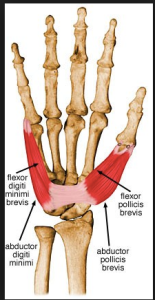
The joints of the hand — understanding how they work together is key to natural vibrato.
Motion Study: Feeling the Difference
- Allow the wrist to react. Bring the left arm up to playing position without the instrument. Allow the forearm to move back and forth. Notice how the hand naturally reacts — bending forward and backward from the wrist in response to the arm’s movement. This is the chain reaction that underlies natural vibrato.
- Resist the reaction. Repeat the forearm movement, but this time deliberately prevent the hand from reacting — keep the wrist stiff. Notice the tension that immediately builds in the wrist, hand, and arm. This is what arm-only vibrato feels like when the wrist is locked out of the equation. Return to step 1 and feel the contrast.
- Move the wrist alone. Now try moving the wrist back and forth without any forearm movement. Notice the effort required to drive the wrist rather than allowing it to react. This is the inefficiency of wrist-only vibrato when it is forced rather than responsive.
Be sure to relax the arm down to your side between each step. The goal is to observe the kinesthetic difference between these sensations — if the muscles become fatigued, the subtle distinctions become harder to feel.
The Half-Step Sliding Study

A simple study frequently used when introducing vibrato is to slide the finger back and forth by a half step — a way of feeling the backward motion that underlies vibrato. The key component in developing a more natural and effortless approach is learning to allow the hand to fall back with a feeling of release, in much the same way that the back-and-forth movement of the hand is a reaction to the arm’s movement in the study above.
While this study begins slowly, the goal is to cultivate quick oscillations in the fingers over time. Dounis’s emphasis on the impulse originating at the fingertips is important here: as the fingers initiate quick oscillations, the wrist is able to react to them naturally — and the vibrato develops its own momentum and fluidity.
Transferring Balance from Finger to Finger
Dounis also describes a study for developing the sense of balance as it transfers from finger to finger — which he identifies as the foundation of a correctly produced vibrato:
“The hand should feel it is poised or balanced on the playing finger. The transfer of this feeling of balance from one finger to another constitutes the basis for a correctly produced vibrato. This results in a feeling of lightness and freedom in the left hand at all times.
“Vibrate on one string with the first and second fingers, both remaining down, on long notes. Then place the second and third fingers down on the string, vibrating with both of them together. Then vibrate with the third and fourth fingers together. Then play various skips, skipping from the first and second fingers to the third and fourth.
“It is understood from the foregoing that it is an exercise to acquire the ability to transfer the balance of the hand from one finger to another.”
— D.C. Dounis
This exercise is deceptively simple and profoundly effective. The goal is not just to vibrate — it is to feel the hand rebalancing as it moves from finger to finger, so that the vibrato remains consistent, free, and uninterrupted across the entire fingerboard.
* Courtesy Byron Duckwell, based on transcripts of an interview with D.C. Dounis while in New York City. This is believed to be the only interview in which Dounis spoke about his understanding of technique beyond his published etude books. Interviewed by Samuel Applebaum.
by Rozanna Weinberger
0 comments