
Kids take a chance. Adults play it safe.
Fortune 500 companies that depend on innovation have learned a few essential truths about creativity — and hardwired them into their culture. The central question for educators and musicians alike is the same: How can teachers create a trusted environment where students feel secure enough to take risks and truly play?
What Neuroscience Reveals About Creative Flow
Charles Limb, a neuroscientist at Johns Hopkins University and self-described music addict, became fascinated by how musicians like John Coltrane and Miles Davis could produce the work they did. To find out, he conducted an experiment observing the brain activity of musicians while they improvised.
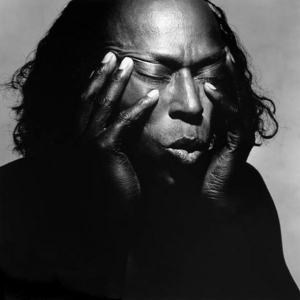
Miles Davis — a master of musical improvisation and creative risk-taking.
The process began with a surge of activity in the medial prefrontal cortex — an area connected to self-expression — suggesting that improvising musicians were engaged in a kind of real-time storytelling.
At the same time, there was a dramatic shift in the dorsolateral prefrontal cortex (DLPFC) — the area associated with impulse control and self-censorship. Remarkably, before a single note was played, the brain deactivated the DLPFC during improvisation. In contrast, this circuit remained fully active when musicians performed a memorized, prepared piece of music.
The Inner Censor: Music, Comedy, and the Art of Letting Go
Overcoming inhibition is essential not just for jazz musicians, but for actors and comedians who rely on improvisation. Second City — one of the world's great training grounds for comedic talent — uses methods developed by Viola Spolin, the theater educator and director internationally recognized for her Theater Games system of actor training.
“The ability to not care what others think is one of the most important lessons taught at Second City.”
This lesson has direct value for string players, whether approaching a musical or technical challenge or exploring improvisation on the instrument. Second City uses warm-up exercises specifically designed to silence the inner censor — to get people to the point where they can say the first thing on their mind without judging it as good or bad.
“Because that inner voice — the voice that tells you not to do something — is the voice that kills improv.”
What Children Know That Adults Forget
As a string teacher, one of my core goals is to help students become non-judgmental in the practice room — so their brains can fully process information and their bodies can discover the most natural, freeing way to play. The real challenge is helping students do difficult things easily.
Over time, something shifts in most learners:
- They become more sensitive to the opinions of others and begin to lose their freedom to explore.
- Children who feel secure — who are in a trusted environment — are the ones who feel most free to play.
- Kids will take a chance. If they don't know the answer, they'll try anyway — because they haven't yet learned to be afraid of being wrong.
“If you're not prepared to be wrong, you'll never come up with anything original” — because you won't give your life the opportunity to let it emerge.
Our budding ideas may not be perfect or even complete when they first appear. But if we can reawaken a childlike, wide-eyed approach to learning and discovery, we are far more likely to let those ideas and talents develop fully over time.
— Thomas Kelley with Jonathan Littman, The Art of Innovation
by Rozanna Weinberger, February 22, 2014
0件のコメント